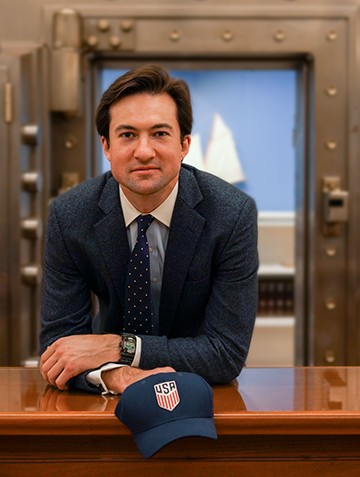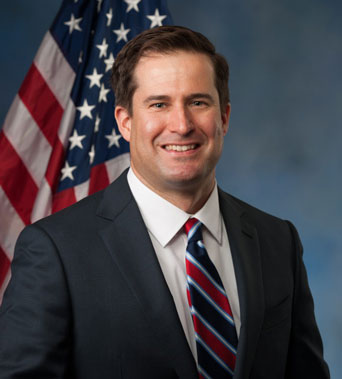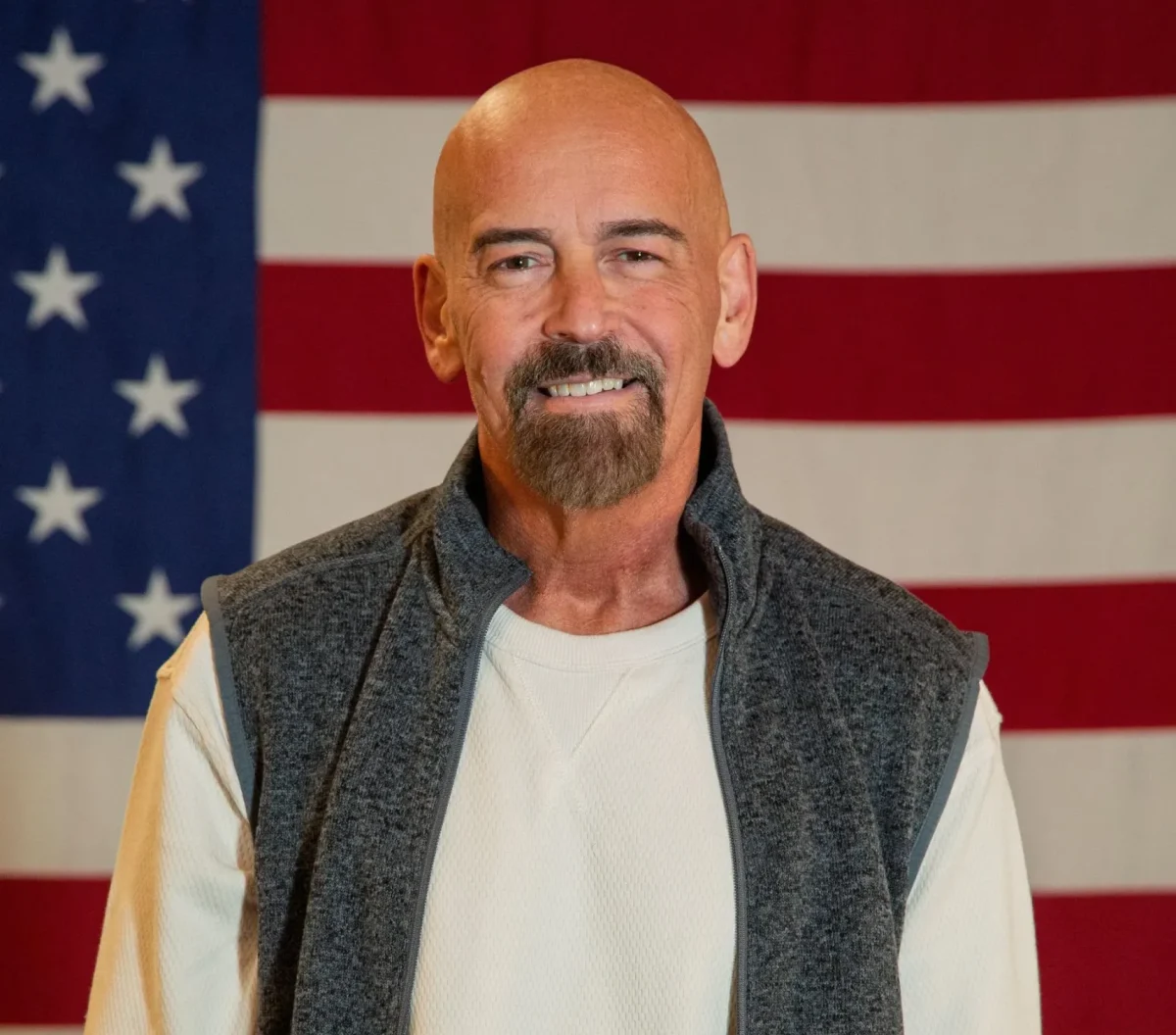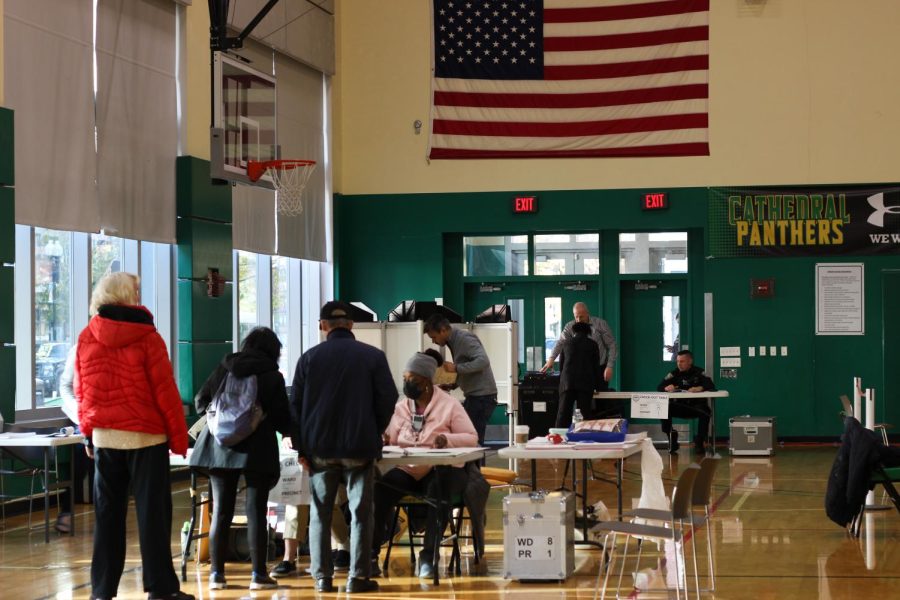
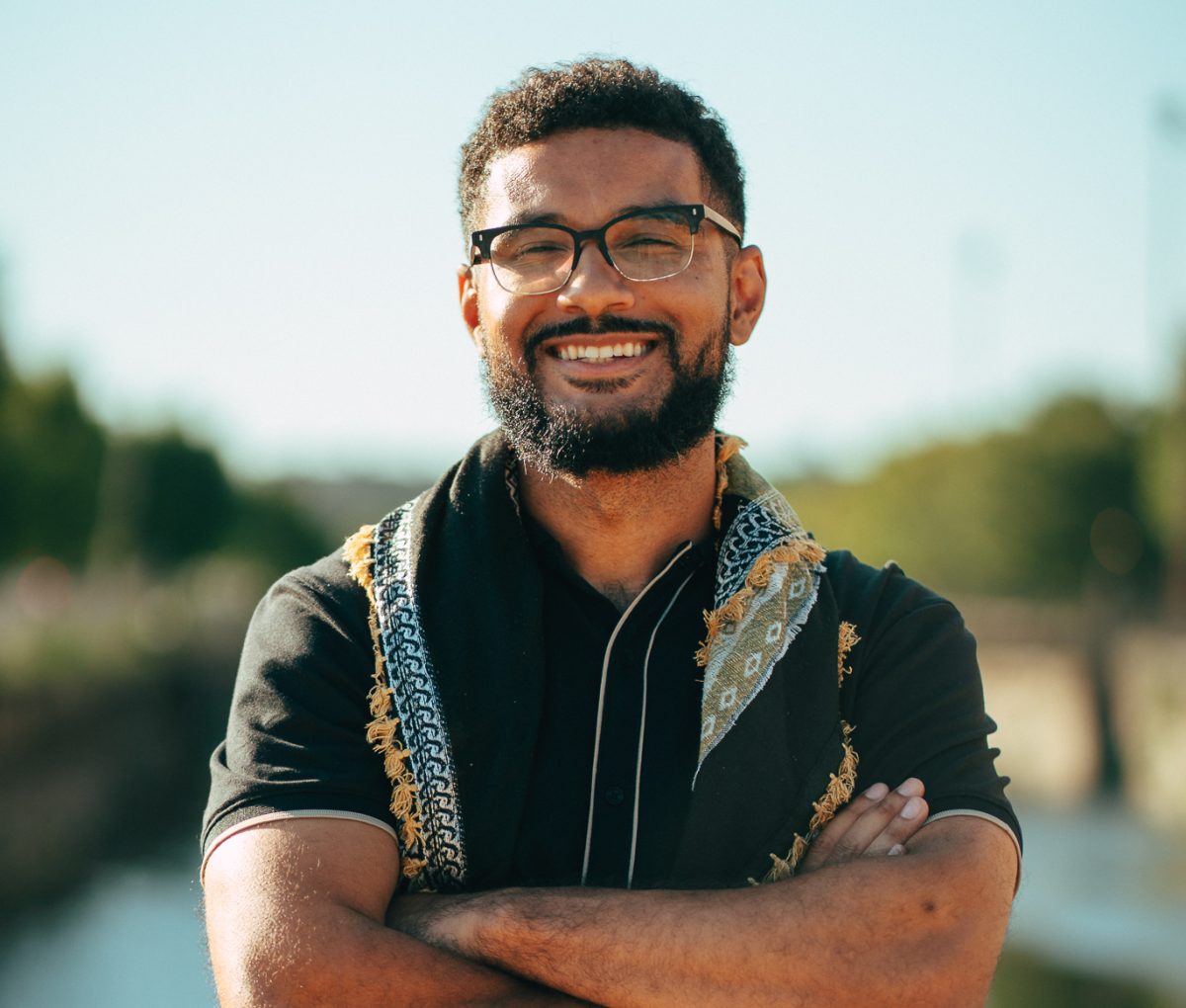
Joseph Tache, age 30, was born in Philadelphia, Pennsylvania and currently works as a youth worker, community organizer and activist based in Boston. He announced his intent to run for U.S. Senate with the Party for Socialism and Liberation, or PSL, November 1, 2025. It is his first time running for the office.
Tache attended Northeastern University as a business major from 2013 to 2018, during which he became involved in activism on campus and around Boston. His advocacy includes opposing Northeastern’s expansion into Roxbury and canvassing for affordable housing and public education. After graduating, he worked as a High School Equivalency Test instructor and mentor for first-generation college students and later ran a high school extracurricular program focused on workers’ rights. Between 2022 and 2024, he worked as a staffer at the Boston Liberation Center. Since he joined the PSL in 2018, he has supported its growth throughout Massachusetts.
According to Open Secrets, Tache has raised $96,092 for his Senate campaign. The top three organizations contributing to Tache’s principal campaign committee were Google parent company Alphabet Inc, Massachusetts Institute of Technology and Boston Public Schools. His campaign committee has received no money from PACs.
This interview has been lightly edited for clarity. It is part of a series of conversations with the candidates running to serve as U.S. Senator from Massachusetts. The other interviews in this series can be found here.
CHLOE CRAFT: Thanks for sitting down with me. We’ll get to the politics, but first, I’d love it if you could introduce yourself as a person.
TACHE: My name is Joe Tache. I’m running for US Senate as a candidate with the Party for Socialism and Liberation. We’re here on Northeastern campus, I’m a Northeastern alumni. I graduated in 2018 and it was my time at school that really introduced me to the world of politics and organizing in a deep way. I first came to Boston, and Northeastern by extension, in 2013 and it was shortly after the murder of Trayvon Martin in Florida. I was born in 1995, so I’m 30 years old. I’m just legally old enough to run for Senate. And Trayvon Martin was also born in 1995 and so for a young man in high school who could have been me, could have been one of my friends, to be murdered and to have his murder justified in the media and to ultimately for his murderer to be acquitted, was a kind of wake-up call for me that there were still major issues in this country. Because again, this is also just a few years after Barack Obama had been elected as the first black president and we were told that we were entering a post-racial society.
I came to Northeastern with the desire to understand the world better and also a desire to make the world a better place and whatever contribution I could make to that effort. And I was actually a business major, because even back then, as an 18-year-old, I had an understanding that money is power in our society and I figured that if I could make a lot of money, I could do good things with it. But quickly, in my classes at Northeastern and co-op I did at a private equity investment firm, I learned the process through which these giant corporations go to make all of the billions of dollars that they make and the way that workers, people in general, our planet, is seen as just a tool for making profit and at whatever costs that comes, the corporations are willing to swallow it.
I learned that I didn’t want to work in business through that, but I also got involved in a lot of student organizing on campus — against gentrification, against Northeastern investment in companies with connections to Israel, for climate action — all different issues that are interconnected. I learned that they all had similar roots, which came back to the system that I was also learning about in my classes of capitalism, of prioritizing profits over everything else. And so that’s what drove me to become interested in socialism. I got involved with the PSL in 2018, I’ve worked in youth programs, GED program, after school high school programs since and in my volunteer time, I had worked as an organizer with the PSL and now I’m running for U.S. Senate.
CRAFT: You’ve definitely made a name for yourself through organizing, whether it be on campus or around the state with PSL. Why run for an office and why the U.S. Senate?
TACHE: Martin Luther King, Jr Day just passed and in preparation for the celebration that our campaign did for MLK Day, I was reading his last book called “Where Do We Go From Here: Chaos or Community.” It was written at a time, in 1967, the Civil Rights Movement had won its major victories, the Civil Rights Act of 1964, the Voting Rights Act of 1965 and yet the years immediately after those acts were passed were some of the most tumultuous of King’s life. You had urban rebellions happening all across the country as a product of continued racism and poverty that black people and people of many different backgrounds are facing in the US. And King was writing at this crossroads moment where he reached the conclusion that to solve the problems facing black communities in the US, we need federal programs involving billions of dollars. And he extended that analysis to the need to end poverty in this country in general and that if we don’t address our country’s priorities of spending to meet people’s needs instead of to make billionaires richer and to wage wars abroad, then, as he said, we’re approaching spiritual death as a nation.
The U.S. Senate does a lot of things and chiefly it is part of the process of deciding the federal budget, which is a massive amount of resources every single year. And we just saw Congress, for example, over the summer, pass the Big, Beautiful Bill, which provided hundreds of millions of dollars of tax cuts to billionaires. It cut Medicaid by hundreds of billions of dollars. It cut SNAP by hundreds of billions of dollars and it gave more money to ICE and to the military. And it’s kind of hard to imagine as a regular person who does not have access to a billion dollars let alone a million dollars, how much money that really is. But keep in mind that a billion is 1,000 millions, right and we’re talking hundreds of billions of dollars.
I think it’s very important for us to have voices at all levels of politics, but in particular where the levers of masses of resources in our society really are, to say the problems of poverty, the problems of people not being able to afford to keep roofs over their heads or put food on their tables or to afford health care, it’s not because we have scarcity in our society. It’s because we have a completely irrational way of distributing resources in our society and if we use those hundreds of billions of dollars to instead invest in life, instead of investing in militarism and racist immigration policies and all the like, we actually could solve society’s problems. So I think it’s important to be running this race on a federal level in order to shift that paradigm. And one of the key slogans of our campaign is “we have the means.” We have the means to meet every single person’s needs in our society. We just need the political power to do so.
CRAFT: This idea of meeting people’s needs encompasses a lot of stuff. You mentioned a lot of things we want to stop funding: ICE, militarization, that sort of thing. But let’s say, fast forward in time, you’re elected tomorrow. What’s the first thing on that to-do list? The first tangible action that you would want to take?
TACHE: I think that the biggest thing is prioritizing not putting money in the pockets of billionaires and instead investing in all of these different programs of life. I actually don’t think it has to be like we have to choose healthcare or education or we have to choose putting food on our tables or arts and culture in our communities. We have the resources to do all those things. At the top of my agenda is being part of a movement that is demanding a wholesale change in the priorities of our political system and economic system in the US. And I think, first and foremost, that will require breaking the political power of the billionaire class and their hold over the political system in our country.
Also, I have an understanding that just because you elect me as a senator from Massachusetts doesn’t mean that all the other politicians in the country who are part of that political machine that’s controlled by the billionaires go away immediately, right? So the priority of this campaign is, yes, winning the election, but more importantly, is building a movement that extends beyond Election Day on November 3. Because really, the fight is going to require not just electing one, two or a few people to Congress. It’s going to require building a movement of millions of people across the country who want to shift politics and shift the way that our country is organized. If you look at all of the most important changes in this country’s history, from the civil rights movement to the labour movement to the women’s rights movement, all of them were propelled by the actions of everyday, regular people. So in a way, this campaign, I want to change the paradigm through which we think about US politics, where politicians will always tell you, ‘If you elect me, I will do X, Y, Z for you.’
I think a lot of the reason why people are checked out from politics and so many people don’t vote every single year, is because we’re tired of seeing those lies from politicians where someone is elected, they make promises and they don’t keep them, because ultimately, they’re either bought and paid for by the same billionaire class that is creating the problems, or they’re an individual who’s a drop in a sea that makes it very hard to implement that change. And so I think I have to have a sober understanding of the fact that there’s an entire political and economic system that is geared towards prioritizing the profits of a few rich people over everything else and that’s really the priority of this campaign, is building a movement, inviting people in, through this campaign and beyond, to fight to completely shift the paradigm of how our society is organized.
CRAFT: You said something that stuck out to me, about voters feeling like, ‘Oh, I’m just a drop in a sea. Why should I turn out to vote?’ Polling has shown this hesitancy, especially in young Americans, which Massachusetts has plenty of. If you were to speak to a young person who’s unsure about voting, maybe it’s their first time voting, what would you say?
TACHE: We’re facing generational and existential questions as humanity. There’s the question of climate change. I’ve grown up my whole life being told that if we don’t reduce our emissions by 2030 then we are going to really struggle to have a livable planet in the future and 2030 is right around the corner and we’re actually going backwards on the question of climate change. We have the introduction and rapid development of artificial intelligence into the economy where millions of jobs are at threat of being eliminated from the economy permanently. And so I can see just on those two questions alone, as a young person, our society to look at that and feel a sense of pessimism.
But it’s really important for us to understand that the only people who benefit from us giving up without a fight are the people who desire a maintenance of the status quo. And the easiest way to win a fight is if you can psychologically make the people that you’re up against give up before they even enter the ring. That’s what this capitalist system does to so many people, where we look out and we see all of the poverty, the inequality, the violence and it can feel overwhelming for people.
I think we should step back and think about the conjuncture that we’re in in our society, where historically, the problems that humanity has faced is a question of scarcity, right? If you think about the long history and the long arc of humanity, how do we develop the means to meet people’s needs? We had to figure out how to use fire and electricity and all the different types of technology that we have mastery over and we’ve done that. We actually do have all the means at our disposal right now to meet people’s needs and so despite all of the challenges that exist in our society, there’s actually immense cause to feel optimistic, because if we can address the fundamental question, the fundamental problem of the fact that there’s 900 billionaires in this country who have an inordinate amount of political power and we can take that power out of their hands, we can do so much to meet people’s needs and to really just invigorate our society and the creativity of people in our society.
To me, having that vision of the fact that all those things are within reach, but they require political action, is the biggest motivation for people to take an action and get involved. And it doesn’t just have to be with your vote, right? It can be with your voice. It can be with you taking action in your communities, at your workplace, at your schools, in the streets. There’s many different ways that politics can and should be done and the most important thing is understanding that it’s not a spectator sport, that nothing good happens in society without the efforts and unity of a mass group of people. And you’ll also find a level of purpose and optimism that is breathed into you by being part of that type of effort. If people come out to our volunteer events for this campaign, if they come out to the public events that we’re having, they’ll feel that, they’ll feel that they’re part of a community of people who have a desire and a belief that a better world and a better society is possible. And it’s kind of infectious. It’s contagious once you get involved. And so I think it’s worth taking that first step, even if you feel a little pessimistic.
CRAFT: You’re a graduate of Northeastern, which is of course one of Boston’s many universities. Right now, we’re seeing several attacks on higher education by the Trump administration. Northeastern students are also calling out their administrators for high prices and low transparency. Do you have any policies regarding higher education that you’d like to share?
TACHE: I think the conundrum you’re describing is one of the fundamental problems of our current way of organizing our society, which is that essential social functions like education, but you could also think of healthcare, for example, housing, are at the whims of billionaires who really desire, first and foremost, to protect their own profits. And so institutions make decisions not on the basis of what is going to create the best learning and research environment for our students, or what is going to provide the best health care for our population, or what’s going to make sure that every single person can have a house over their head, but rather, what can we do to make sure we don’t piss off our donors? That’s just an untenable way of organizing our society. It’s what I would call a race to the bottom.
Again, I learned this in my classes here at Northeastern as a business student, that it’s not just about making a profit. It’s about maximizing your profits and the most important thing is making sure that you make more profit next quarter than you made last quarter. That is a dynamic that exists within the capitalist system, this profit maximization and if anybody who is a capitalist doesn’t want to abide by those rules, they get beat out by the competitor and they get put out of business, or they get subsumed within their competition. It’s this kind of spiraling beast of a system that always prioritizes the growth of the profits of a few. If that is the circumstance, then we’re going to continuously be in a place where we’re actually seeing harm being done in educational institutions or otherwise and there’s no guardrails on stopping that backslide because of the fact that these institutions feel so accountable to their billionaire or rich donors.
I think the ultimate solution is that we need to take the essential social functions of society out of the realm of profit making. Northeastern as an institution should not be more concerned with what its billionaire donors think than making sure that students can receive a good and affordable education and become a productive contributor to society through whether it’s journalism, through STEM, whatever it is that they’re doing. And again, it comes down to a question of resource distribution, because if our higher educational institutions have to rely on billionaire donor funding and all the billionaires that donate and have buildings named after them on Northeastern’s campus, including the weapons contractor Raytheon, has an ampitheater right, if that’s who our educational institutions are relying on for their funding. But if we look at the massive federal budget, every single year, we could be giving so much more to education to make sure that research is funded, to make sure that scholarships are funded, that students don’t have to go into massive debt in order to afford an education. So for an institution like Northeastern or any other school, I think the best way to protect the students and workers at that school is to make sure that a university is not a business and instead it should be an institution of education, research and the development of our society.
CRAFT: I want to talk to something related to two things you mentioned, which are defense funding and the federal budget. There are a lot of conversations being had about the institutions and the companies that Northeastern has partnered with in terms of divesting and cutting ties. And in federal politics, there’s a lot of talk about the politicians who are taking money from defense contractors and from AIPAC. I know you have a lot to say when it comes to Israel, I’ve seen you at protests, I’ve heard your speeches. Can you talk a bit about the influence of defense companies and AIPAC in Congress and your thoughts on that?
TACHE: As I mentioned earlier, I’ve been going to protests for justice for Palestine since I was a student here at Northeastern and it’s not something that I understood my whole life, because there’s so much propaganda in our society that has muddied the waters about the reality of the situation in Palestine. And it’s really only over the last two to three years with this mass movement that we’ve been able to build, that so many people understand the truth, which is the fact that Israel is a colonial society. It’s an apartheid state constructed based on racism and an attempted genocide of the Palestinian people, not just starting in 2023 but long before that, starting in 1948. And it’s important that we oppose that in the US in particular, because billions of our tax dollars are used every year to subsidize that oppression and that violence. And not only is it a terrible thing for our tax dollars, which you know, we’re working every single day hard to provide for our families and that money is being used to fund violence and genocide against Palestinian people. And then the alternative is that it’s again, not being used to fund the things that we desperately need here at home as well. It’s very important for anybody of conscience to oppose US funding for Israel, to oppose the distribution of US weapons to Israel.
Also, it’s important for us to understand the root of the dynamic here, because there’s an understanding that’s developed among some people that Israel controls U.S. foreign policy. I would actually say that we should see Israel as a tool of US foreign policy. The U.S., for decades, has had a vested interest in keeping the Middle East weak and divided, because there has been a history, especially in the 20th century, of Arab countries seeking independence, nationalizing their oil, trying to keep their resources out of the hands and control of U.S. corporations. The U.S. has seen the best way to prevent that as stopping the rise of any government that opposes U.S. business interests and waging wars that divide people along religious and ethnic lines in the Middle East. Israel is basically a military outpost of the U.S., which facilitates that by waging war on all the countries that the U.S. opposes in the Arab world. So I mean, I don’t take money from AIPAC. I think it’s disgusting for any politician to take money from AIPAC and to water down the crimes that Israel is committing against the Palestinian people.
I also don’t think that the conclusion should be that Israel is controlling U.S. foreign policy, but rather that U.S. foreign policy, for too long, has been based on exploitation and domination of people abroad, instead of based on solidarity and cooperation to address the common problems that we face as humanity, like climate change. Climate change is only going to be solved through collective efforts of people across the world. And instead of leading the efforts to address that on a global stage, the U.S. government is busy waging wars and threatening countries with tariffs and all different types of aggression. Remember, the U.S. spends almost around a trillion dollars every single year on its military. Trump wants to increase that to one and a half trillion dollars every single year. And so it’s a demonstration of a foreign policy that, again, is based on militarism and the U.S. support for Israel is an extension of that policy. And again, I think we should all oppose that.
CRAFT: I want to talk a bit about your opponents. You’re standing alone as a PSL candidate and you’re going up against an incumbent senator and a sitting representative with progressive voters. Two questions here: Why run with PSL rather than with a mainstream party and have you met your opponents?
TACHE: I’ve met a few of them. I’ll zoom out and say, the reason that I’m running as a candidate and that we’re invested in this race as the PSL isn’t really about any one individual, as one individual in particular, obviously, Sen. Ed Markey is the incumbent right now and there’s a current congressman, Seth Moulton, who’s running against him. And then there’s a pretty diverse field of people who are running as well. And this comes back to what I was saying in terms of my conception of politics as a socialist, whereas some people are running to say, ‘Sen. Markey has not done enough as an individual, I’m going to come in and do something different.’ I think there’s a lot to critique Markey and all Democratic Party politicians on, but it’s not really just about Markey as an individual. It’s about the political project that he’s a part of.
Frankly, this campaign is an indictment of the two-party system as a whole, because both parties are ultimately beholden to their donor class, to the rich and powerful. And I think until we build a political movement that is independent of the people who are causing the problems that we’re facing every single day, we’re not going to get very far. So there’s a lot of Democratic Party politicians right now who are putting forward the slogan to abolish ICE. I support that call as well. But ICE, since it was created in 2003, it’s been a bipartisan project to fund and grow it, right? Obviously, there’s, maybe it’s not obvious, but many people know that up until recently, Barack Obama held the record for the most deportations of any president and ICE funding was increased under his administration, just like it was increased under Trump’s administration, by both Democrats and Republicans. And there is a certain unity that Democrats and Republicans have around the general outlines of the status quo, in terms of a unity around U.S. militarism, a unity around the supremacy of the idea that billionaires should have the right to make all the profits that they want at the expense of everyday people. And Democrats may try to temper some of the worst excesses of that system, but ultimately they don’t challenge the fundamental issues that we’re facing, which I would say is the capitalist system, this irrational economic system that allows 900 billionaires to control as much wealth as the poorest 170 million people in this country. So this campaign is about inviting people into a political movement that is independent of those billionaires who are the source of our problems and independent of the political parties that represent them.
Just to give a historical reference, there’s a great former senator from Massachusetts called Charles Sumner and he was elected first in 1851, long time ago, but that was a year after the Fugitive Slave Law was passed. This is a law that enabled slave catchers to go to Northern states where slavery was illegal, like Massachusetts, kidnap black people under the production of federal warrants and federal agents and bring them back into slavery. I mean, it sounds eerily similar to what ICE is doing today, right? Charles Sumner, when he was elected, was one of just a handful of abolitionist politicians in Congress. There were a few, or actually a good handful of politicians with what was called the Whig Party at the time, who morally opposed slavery, but they said, ‘Well, we just have to accept that it’s a necessary evil in our society. This is how we keep peace within the union, is to accept some degree of slavery.’ And then you had the Democrats in the South who were very pro-slavery and Charles Sumner was part of a minority that argued that we need to abolish slavery completely, right? And I would say that if you take that parallel to today, the Republicans are now the Democrats of the slavery era. They want capitalism, racism, white supremacy, unfettered. The Democrats today are like the Whigs of that era. They might have some critiques of the excesses of the system, but they don’t really want to address the root cause of the problem. And what we need to be is the abolitionists, the people like Charles Sumner in the Senate, but also the thousands, millions of people all across the country who are part of a movement to say, ‘We’re not going to accept slavery and the branding of a whole people as subhuman as a necessary evil. We’re going to uproot the system and abolish it.’
When Charles Sumner was first elected, he was one of three abolitionist senators. That number kept growing and growing and growing alongside a growing abolitionist movement. And 15 years after Sumner was first elected, slavery was abolished. So the point I’m trying to make is that politics can develop very rapidly, but it’s very important to have bold and courageous leadership that is independent of the status quo. That’s why I’m running this campaign as a socialist and also invested in building a powerful socialist movement, because we’ve seen time and time again, the Democrats and Republicans as institutions and the politicians who are elected as part of those parties, fail to meet the needs of what this moment demands politically.
CRAFT: Let’s switch to a couple of light-hearted, quick-fire questions. What is a song that you’ve listened to lately?
TACHE: “Folded” by Kehlani has been stuck in my head.
CRAFT: Do you have any book recommendations?
TACHE: I just read a great book about Charles Sumner called “The Great Abolitionist.” I recommend that one.
CRAFT: Who’s someone you look up to, in politics or otherwise?
TACHE: I just said Charles Sumner, so I’d better think of somebody else. This maybe is a cheat answer, but I’d say all the people that I organize alongside with in the PSL and who have shaped me as an organizer over the last eight years.
CRAFT: What’s a good piece of advice you’ve gotten recently?
TACHE: Dream big.
CRAFT: If people only remember one thing about you, what should it be?
TACHE: I’m part of a bigger movement and if you join that movement, we can transform society together.
CRAFT: Thank you for your time. To wrap up, if there’s any question you want to answer that I didn’t ask, I’ll give you that space.
TACHE: No, it’s been great talking with you.