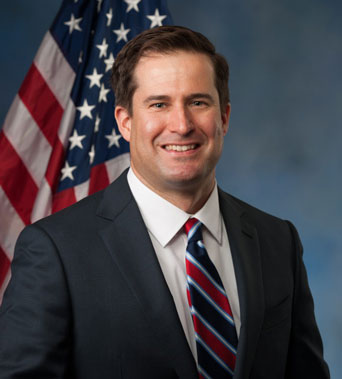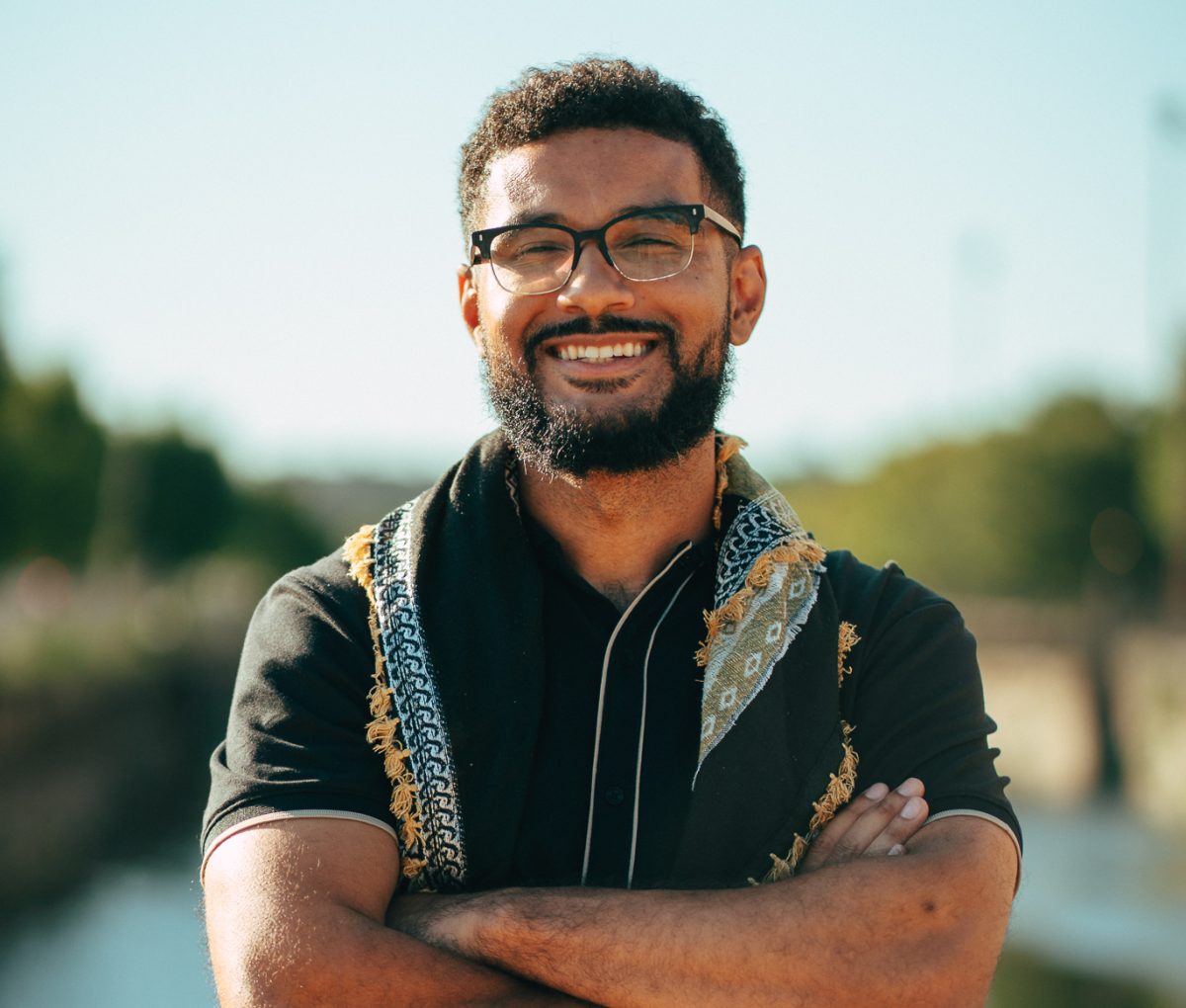
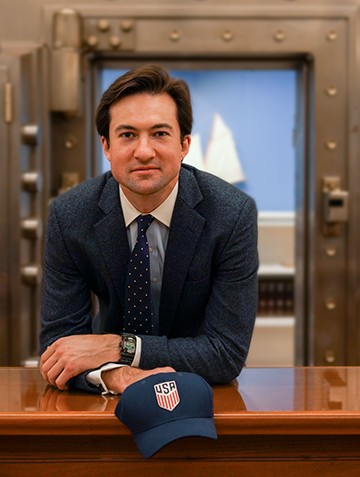
Morgan Dawicki, age 30, was born in New Bedford, Massachusetts and currently works as Chief Operating Officer of the Northeast Maritime Institute, a private maritime college which his parents founded. He announced his intent to run for U.S. Senate as an independent July 4, 2025. It is his first time running for the office.
Dawicki earned a bachelor’s degree in international affairs from The George Washington University in 2018 and Master’s of Public Administration from American University in 2023. In 2016, he interned at the U.S. Department of State under the Bureau of Oceans and International Environmental and Scientific Affairs. In 2017, he became the youngest licensed tall ship captain in the United States at the time. As Captain aboard A/V Fritha, he trained new sailors and ran team-building programs for youth, including working with the Fairhaven Project, a conflict resolution initiative that invited Palestinian and Israeli high school students to sail aboard S/V Fritha together. He has been the chief operating officer of Northeast Maritime Institute since 2023.
According to Open Secrets, Dawicki has raised $16,497 for his Senate campaign. The top organization contributing to Dawicki’s principal campaign committee was typeface company Monotype Imaging. His campaign committee has received no money from PACs.
This interview has been lightly edited for clarity. It is part of a series of conversations with the candidates running to serve as U.S. Senator from Massachusetts. The other interviews in this series can be found here.
CHLOE CRAFT: Thanks for sitting down with me. We’ll get to the politics, but first, I’d love it if you could introduce yourself as a person.
MORGAN DAWICKI: I just turned 30 back in December and this is my first foray, officially, into politics. I grew up in the maritime industry. My parents are proud family business owners. When my mom was pregnant, they purchased a school in New Bedford, Massachusetts, and fast forward 30 years later, they’ve trained about 80,000 mariners. So what was once a small, one-classroom school has since become the first private Maritime College in the U.S. I’ve watched that over 30 years growing up, all the blood, sweat and tears that go into owning a business, and also the pride and passion of education. All the things that we do for the people that walk through the doors — who now in 2026 take a lot of classes online — has really been the driving force behind my development as a person, and sort of seeing the amount of energy that goes into really delivering for people.
I think this unique perspective of it being a family owned business and simultaneously an educational institution is very unique, and so I get to do a little bit of everything now. I get to teach. I am an executive. I write policy. I’m involved in international policy development, so I’ve really had this opportunity to be shaped in many different ways and well rounded. I’ve seen what it takes to help those with a sixth grade education get through a two-week long class that is going to transform their lives. It’s about going above and beyond to deliver that educational service, but also make sure that those people feel inspired and capable and excited about the opportunity that they have, and so just being able to get people across the finish line and onwards and upwards into new phases of their lives; that educational piece is something that they take with them. They see the amount of energy we invest in them, that I get to invest in them as a teacher sometimes. So it really is a fun, unique experience, and that’s sort of been the hallmark of my development over the first 30 years of life, being encapsulated in that environment.
CRAFT: From there, what made you decide to go into politics?
DAWICKI: I think ultimately it’s that same essence of, how can I help people? I get to see it as a teacher, as somebody who’s involved in education — how can I take it the next step? I’ve always sort of been a policy wonk. I’m pretty good at seeing things from the 30,000-foot view and distancing myself, and that, I think, gives me a capacity to really see the problems as they are. I think when you get stuck in the thick of things, it’s hard to see the forest from the trees. And I just feel like I’ve developed this capacity to really step back and say, how do we solve this effectively and efficiently and really get results for people? I think this was sort of a natural transgression from teaching. Teaching is sort of political in itself; it’s dealing with personalities and everyone’s different and trying to cater to everyone’s needs. So I think that probably speaks to why, at least in the current Massachusetts delegation, we have a lot of former teachers who are in Congress. I think it just gives you that skill set to really deal with people from all across the spectrum.
CRAFT: You could run for a lot of different things. You could be a city councillor, a state representative or state senate. Why run for U.S. Senate?
DAWICKI: Ultimately, it was about sending a message that my generation needs to be bold. I think we’re scared of a lot of things. We are unsure of a lot of things. We’re kind of living through this hyper-transformative period in history and we feel disillusioned. In many ways, we don’t really know which direction to go. We’ve been dealt these cards, at least with Gen Z, with going through school during COVID. And so I think there’s a lot of social behaviors that are really different than they were just 10 years ago. I think ultimately, one of my favorite books is a biography about Ted Turner, who famously created CNN and was kind of this boisterous guy, a little notorious in certain ways, but really a character and a guy that just went out and did things. The name of the book is “Lead, Follow or Get Out of the Way.” So either throw your hat in the ring and lead, pick somebody who you think is going to be an effective leader, or just get out of the game.
My message to my generation, younger generations, is lead or follow, don’t get out of the way. Try to find that person or become that person that is going to help drive change. If you’re not a leader, you need somebody to follow and we don’t have enough people to follow, in my opinion. I think it’s about more people putting themselves out there, throwing their hat in the ring, whether they’re a long shot or not, I think that’s how the best ideas will ultimately come to the surface. I chose to run as an independent because I felt extraordinarily disillusioned, as I think many Americans do right now, about the two-party system. And I think ultimately what I see needs to happen is sort of this withdrawal of collective power from the two parties. It’s not necessarily an indictment of the Republicans being bad or the Democrats being bad. It’s simply saying that the incentive structure is broken, and the only way to change that is to reduce the power of both parties.
If we have a significant — at least in the U.S. Senate — independent caucus, we can start to focus on caucusing individual issues versus people getting thrown into party lines, and just seeing the nastiness that comes out when people choose to vote their conscience or go against the party. So there’s a great movement of independent candidates popping up across the country. I’ve had the pleasure of getting to meet a number who are running for U.S. Senate. You’ve got Todd Achilles in Idaho, Dan Osborne in Nebraska, Brian Banks in South Dakota, Ty Pinkins in Mississippi and then quite a number of others who are stepping up. So I think there’s a consensus, at least in the U.S. Senate space, that if we could get a few, maybe five or ten independent senators, it would really transform the way we can deliver on legislation in the Senate.
CRAFT: You mentioned the value of running as an independent. I want to talk a bit about your opponents. Have you met them, and what do you think of them? Is there anything you agree on, or anything you really don’t?
DAWICKI: I haven’t met the other candidates yet. I think ultimately, what’s unique about the independent space is really that what unifies us is sort of this distrust of the two-party system, this belief that the incentive structure is broken. And so I think ultimately the challenge for independents going forward is going to be really showing people that there is power in the independent movement, and that in order to really make change, there has to be enough of us. It’s hard to message and it’s hard to really transform people’s ideas when you don’t do it through a party structure. And so I’m not shy to admit that this is a huge hurdle — a lot that, for the independent movement, we’re going to have to fight to get over. But I think this election cycle, and in the next few election cycles, I personally believe the political landscape will transform tremendously. And as independents, we’ll be able to make a lot of ground.
CRAFT: I want to draw a bit on your experience in education here. Right now, we’re seeing several attacks on higher education by the Trump administration. Massachusetts is a state densely populated by university students. What are your policies regarding higher education?
DAWICKI: What was interesting over the past two years, there were a couple of changes to Pell Grants for higher education, trying to open up the availability of funding for students. It’ll be interesting to see how that sort of flushes itself out, and whether the expansion of those grants for education is effective in getting people into different fields. It had previously been pretty restrictive, and so I’m all about liberalizing the way government intervenes in education. I think up until this point, it’s been very, very focused on four-year degrees and graduate-level and PhDs. And I think that’s all well-intended, but there’s a lot of different skill sets and professions that only require, for example, a two-year degree. Not every student is cut out for a four-year school, and that’s okay. There’s no reason those individuals can’t be hyper-successful in life, and so that’s what we’ve tried to do through our institution: deliver a two-year degree so students are not leaving school filled with debt, and they’re getting into a profession where their first year of salary is higher than what they spent total on the education. There are very few degrees out there that you can point to that deliver those kind of results.
So, I think we need to change the culture around education, the mindset, so to speak, and really figure out what the economy’s needs are going to look like moving forward. I think it’s hard to say with AI how things are going to change, but there really is something to be said for having a skill set and being able to put that to use. As it relates to education, what’s been frustrating for me in the higher education space is just the cost. I think we’ve gotten to this place where we’re more focused on the experience of the education and not the education itself. From a social perspective, that can be important. But at the same time, when I was doing my bachelor’s degree, I was hyper-frustrated with the fact that I had all these gaps in between classes, and it was structured in such a way that I didn’t have time to go get a full-time internship — because I was there for an hour, I’d have to leave, I’d come back for an hour. That just isn’t very effective. And so I felt like there was a lot of time wasted, and I could have done that degree in three years versus four. And so those are different ways that I think we can look at things.
With Northeastern, the co-op model for me is one of the best things — it really helps deliver that real-world experience. Our students in our two-year degree program go out two summers and they actually work, and they’re getting paid to work. Some of the students actually make almost the entire year’s tuition in 90 days of work. And so that’s something remarkable that the students get to do, but they’re also seeing what they like and don’t like about the industry, and whether they want to work in a different environment. So that co-op model, I think, is something that could be implemented a lot across different spaces as well.
CRAFT: Recent polling found that young Americans are increasingly losing faith in the political system, with those expressing low trust being less likely to say they plan to vote. If you were to speak to a young person who’s unsure about voting, maybe it’s their first time voting, what would you say?
DAWICKI: I think ultimately you’ve got to get students off social media. And I hate to say that, because that’s where you get the highest volume of engagement. I’m a huge anti-social-media guy. I don’t love using it, I don’t post a lot, perhaps to my own detriment, because I think it just manufactures false expectations. I think, from a societal standpoint, from a political standpoint, I urge students to actually get out there and talk to one another, face to face, and actually debate issues and talk about the candidates. What do you think of them? Look at websites. Don’t just watch little 30-second clips and say, ‘Oh yeah, that sounded nice.’ Sounding nice is different from asking, ‘What are the actual policies and what’s the actual mindset behind the candidate?’ That, to me, is the most important thing.
If you get hung up on certain issues, you’re perhaps discrediting a candidate who, from just a personality standpoint, is somebody you can relate to, who you can agree with, who you can expect to do the right thing. I think when we get stuck in this sort of digital world, we’re losing sense of who’s the human behind the screen. And I think ultimately, students, if they get out and actually talk to each other and get organised, they can help transform the future. So whether they find that candidate that speaks to them or not, they have an opportunity here to actually create momentum and unify and figure out what it is that they want the world to look like. And when you get organized, you can help drive policy changes. Students as a collective can form organizations, can form different thought groups and really help drive different things.
My pitch to students is: I’m one of you. I am young. I understand the things we’re going through, the difficulties of the affordability crisis, and recognizing what I think have been more government failures on the side of capitalism. I don’t think capitalism is a bad system. I love capitalism. I think it’s the best system that we have. It’s imperfect in many ways, but I think ultimately, what’s happened over the last 20 years is government policies have created what is essentially welfare for the 1% and mega corporations, and failed to deliver results for working-class people. I think ultimately we need to reverse that trend, and we need to rein in government spending. We’re on a pathway here where our annual payment for the interest is going to exceed our total spending on government services — that’s a scary place to be in. And so we’re in this bit of a conundrum where we need to get more wealth into the hands of the working class, but at the same time, we can’t just keep spending, and nor does massive wealth redistribution necessarily work.
We’ve got to figure out how to create a more dynamic economy, and different ways to look at that can be examined — for example, the way we tax bonuses. Employees are putting in all this hard work for a company to have a great year, and at the end of the year, what happens? They’re given a bonus for that hard work, and it gets taxed at a rate that I think is unacceptable for what should be a one-time exciting opportunity. One example was UPS. UPS had an amazing year one year, and all of a sudden, all the drivers said, well, we want a piece of that action too. And so through union negotiations, they actually said, we want to get paid higher, we want all these benefits and all these things. But what ends up happening is that was a windfall year — a year that UPS made record profits. Not every year is a record-profit-making year. And so ultimately, if you’re doing these massive pay increases, all of a sudden the next year you have to lay people off because you didn’t make those profits again. So that’s an opportunity to say, how do we actually take those dividends or those excess profits and put them back into the hands of the employees without discouraging that.
CRAFT: I wanted to tap into your maritime expertise. There’s a lot of conversations around maritime activity going on right now in that world, whether it be Cuba or Iran, and I’m wondering if you could share some of your unique perspective as an expert in that space.
DAWICKI: I have the unique perspective of having been a delegate to the International Maritime Organisation. I’ve done a lot of policy work internationally. I know intimately international shipping. I think the decision to attack Iran in the way that we did was a great miscalculation. I understand that in terms of their drone capacity, there was kind of this emerging notion that we needed to take it head on, but I think the decision to take out their leadership was the miscalculation. I think there wasn’t enough planning in place to deal with the Strait of Hormuz. We as a nation are highly dependent — and so are our Gulf partners — on shipping and energy and vice versa. So this is the epitome of where warfare is going in the next 20 years, really through these asymmetric tools. Iran was able to put together essentially lawn-mower-engine drones and disrupt the global economy overnight. And so as we move forward as a nation, those sorts of calculations need to be put into place before we make these drastic decisions.
I don’t think there’s going to be a world where we get away from this hyper-liberalised shipping — everyone’s trading with everyone at this point. And so there are notions that if we controlled our own fleet, we’d be able to manage all this overnight. And the reality is, because trade itself is so internationalized, that’s hard to manage. What would need to happen from that perspective is manufacturing and where we get our goods from would need to be much more focused on the Americas, so that we could deal with challenges to shipping disruption as an individual nation. But I think at this point, everything is so international that we need to be better about our decisions on when we choose to go to war, and how it’s going to impact us and impact everybody. It’s been frustrating to watch. If you know shipping and you know maritime, it was an obvious outcome of what was going to happen, and there are really not many tools that the U.S. has in its toolkit to be able to deal with this, because all it takes is one ship getting hit by a drone to really throw off the whole calculus of shippers and ship owners who are choosing to go through the straits.
We’re fortunate in Massachusetts that this didn’t happen over the winter, because we’re dealing with very significant energy price issues. That’s one thing that’s been frustrating for me; the lack of sort of policy at the state level directed towards relieving consumers of high energy prices. We’re very dependent upon LNG [liquified natural gas], and the reason Massachusetts pays higher rates is we’re paying what are called spot rates. So when we have these surges in prices, it’s because quite literally, sometimes there are ships waiting off the coast full of LNG, and when demand spikes, that’s when they choose to sell. And so we’re paying a higher rate at that point. And so there needs to be more energy reliability behind that, in relief to consumers. So I think if this had happened in November or December, Massachusetts families and households would really not be in a good place.
CRAFT: Let’s switch to a couple of light-hearted, quick-fire questions. What is a song that you’ve listened to lately?
DAWICKI: That’s a great question. My all-time favourite song is probably “Closer to the Sun” by Slightly Stupid. I love some surf rock, reggae-type vibes, fun songs.
CRAFT: Do you have any book recommendations?
DAWICKI: I actually have a Goodreads account set up that you can look through on my website. One book that I read a couple of years ago that has stuck with me the most, in the context of international shipping and everything we’re dealing with, is called “Oceans of Green.” It was a very timely book — this was kind of right at the outset of the Ukraine war — what it talked about is really the grain industry as a whole, and how it’s sort of fed the world and transformed the world. There was one takeaway from the book that I got, which was: every empire that has tried to impose its will upon international shipping has not outlasted international shipping. Shipping itself is inherently global, always will be, and that is ultimately the driver for progress and economic wellbeing: maintaining shipping. And so as we progress into the future, I think US policymakers need to be more focused on the maritime space and really truly get to understand a little better that it’s hard to really force maritime outcomes, as you’ve seen probably with the shadow fleet. In recent months, we finally realized, after so many years, that the best way to deal with them was to actually get on board the vessels, seize them and take them out of service. So it takes a lot of force, a lot of time, energy and resources to manage outcomes in shipping, because it is so internationalized.
CRAFT: Who’s someone you look up to, in politics or otherwise?
DAWICKI: I think my parents have always been my heroes. I’ve never met anybody that works as hard as them, and I think everyone says that about their parents, but I truly don’t know how they do it. I don’t know how they built a college from scratch — it’s still beyond me. I’m involved in it every day, and yet it’s still beyond my comprehension. The amount of lives that they’ve touched and been able to help. I’ll meet people and they just tell me these stories of how my parents went above and beyond to really, truly help them get through whatever it is they were dealing with. And so if I can deliver half of what my parents have been able to do for people, I’ll consider that a successful life.
CRAFT: What’s a good piece of advice you’ve gotten lately?
DAWICKI: It wasn’t recent, but one of my mentors and good neighbors recently passed away, and he used to tell me two things. One was, you’re not working hard enough. And what he meant, kind of sheepishly, was, is there something more you could be doing with your time? Can you be more effective with your time? Can you work harder? And two, he always said, don’t do tomorrow what you could do today, meaning now is the best time to get something done. And I think ultimately those kinds of mindsets, however simple they are, really helped drive me to throw my hat in the ring. I have this moment where I can at least get my name out there. Regardless of how this goes, I can get out there, I can put good ideas into the ecosystem of ideas. There’s nothing as infectious as an idea, I like to say. And so this was a great opportunity, I think, to really help drive this independent movement.
CRAFT: If people only remember one thing about you, what should it be?
DAWICKI: I think it’s his willingness to relate to anybody. I can sit in a room — I’ve sat in the room of the U.N. and really seen policy driven that way — and the next week, I can sit in a classroom with a guy who’s got a sixth-grade education and help him get through his learning deficiencies. It’s this capacity to shift myself based on the environment and really know where everyone’s coming from. I know what it takes to run a business. I know what it takes to work with your hands. I can get off a call on critical policy making, and two hours later I’m covered in grease turning wrenches and fixing boats. And so I think that’s given me this really amazing capacity to just say, hey, I understand who you are, where you come from, and what you’re going through. Especially from the family business perspective, it’s been frustrating for me to see so many different small businesses not do well in this economy. And I think ultimately that comes down to, how do we create better sets of government solutions? Because to me, the economy does really well when small businesses thrive — and, by the way, big companies do really well when small businesses thrive too. So that’s something I’m hyper-passionate about.
CRAFT: Thank you for your time. To wrap up, if there’s any question you want to answer that I didn’t ask, I’ll give you that space.
DAWICKI: I think ultimately, my message to people is, don’t get disillusioned. Don’t get frustrated by what we’re dealing with right now. You have to keep pushing. You take it one day at a time. There is great power in lots of ordinary people getting together to do extraordinary things. There’s power in the collective, there’s power behind values.
I think one of the things that frustrates me is just this lack of integrity we have in many ways — other than just politics — in our society right now. We’ve sort of seen, over the last decade, this propping up of what we might once traditionally consider the liars, cheaters and thieves doing really well. And so if you’re a person who wants to live by integrity and honesty, and you’re trying to work every day to get by, and you’re not seeing the results, and the government’s not delivering the results for you — that’s a recipe for people becoming disillusioned with politics and disillusioned with life in general. That’s not a great way for the economy to do well.
We want to feel inspired. We want to feel like we’re contributing to something more and that we’ll actually get rewarded for that honest, good-faith work. I think when you look at things like the sports betting markets, or just betting markets in general, the way they’ve propped up — there’s a lack of integrity, there again, a recipe for lying, cheating and stealing. The cryptocurrency market — a recipe for lying, cheating, stealing, laundering money, facilitating international criminal networks — and yet all these people got filthy rich pumping and dumping cryptocurrency and weren’t held accountable for it.
And so if you’re the average person and you’re seeing somebody get away with that, how are you going to feel inspired getting up every day to contribute to the economy and do what you’re doing? So I think those bad habits don’t tend to last long in a society — I think they will get corrected, but people have to demand the corrections. You can’t just throw your hands up and say, I’m done with this. You have to go out and fight as an individual, as a collective, and really demand accountability and responsibility, even just from your neighbours. It doesn’t have to be necessarily at the political level, but in your communities, there’s plenty of places to do that.