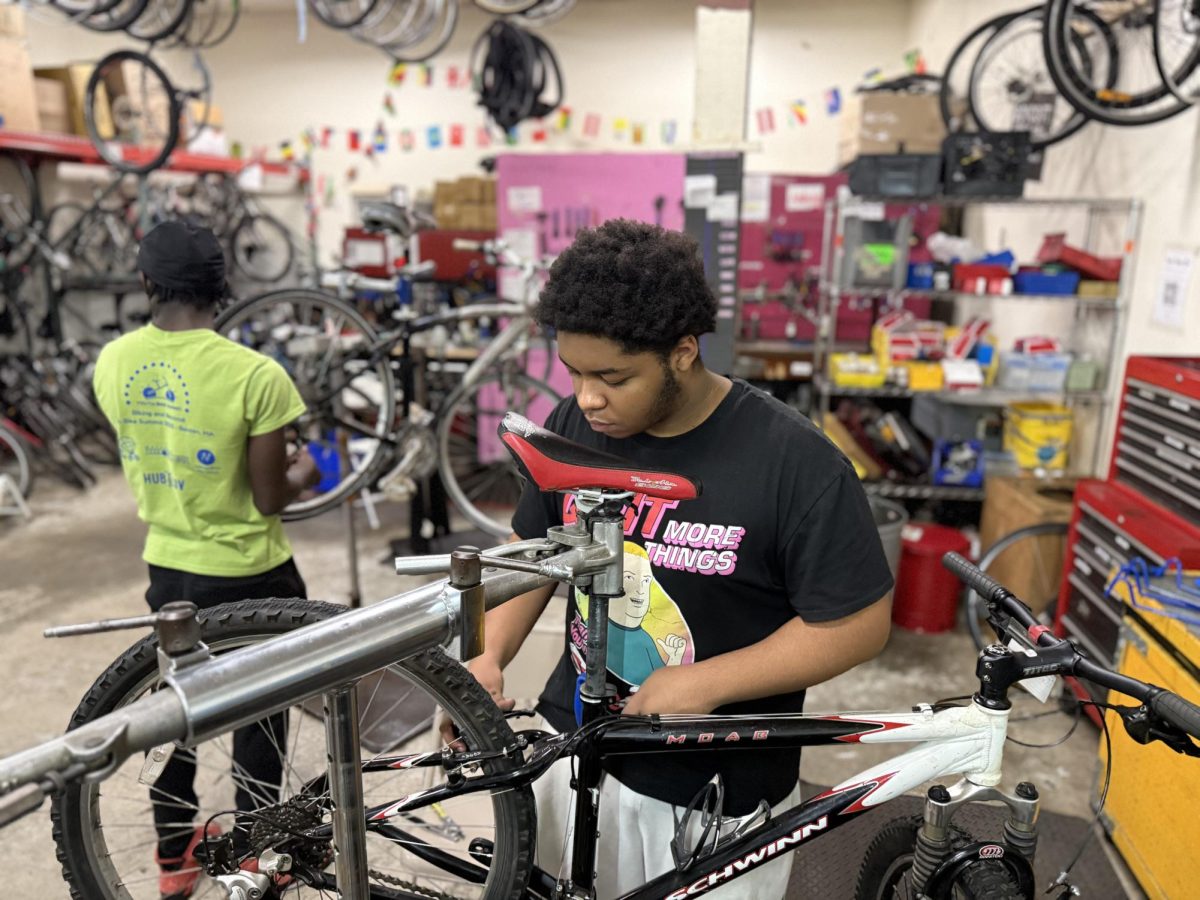
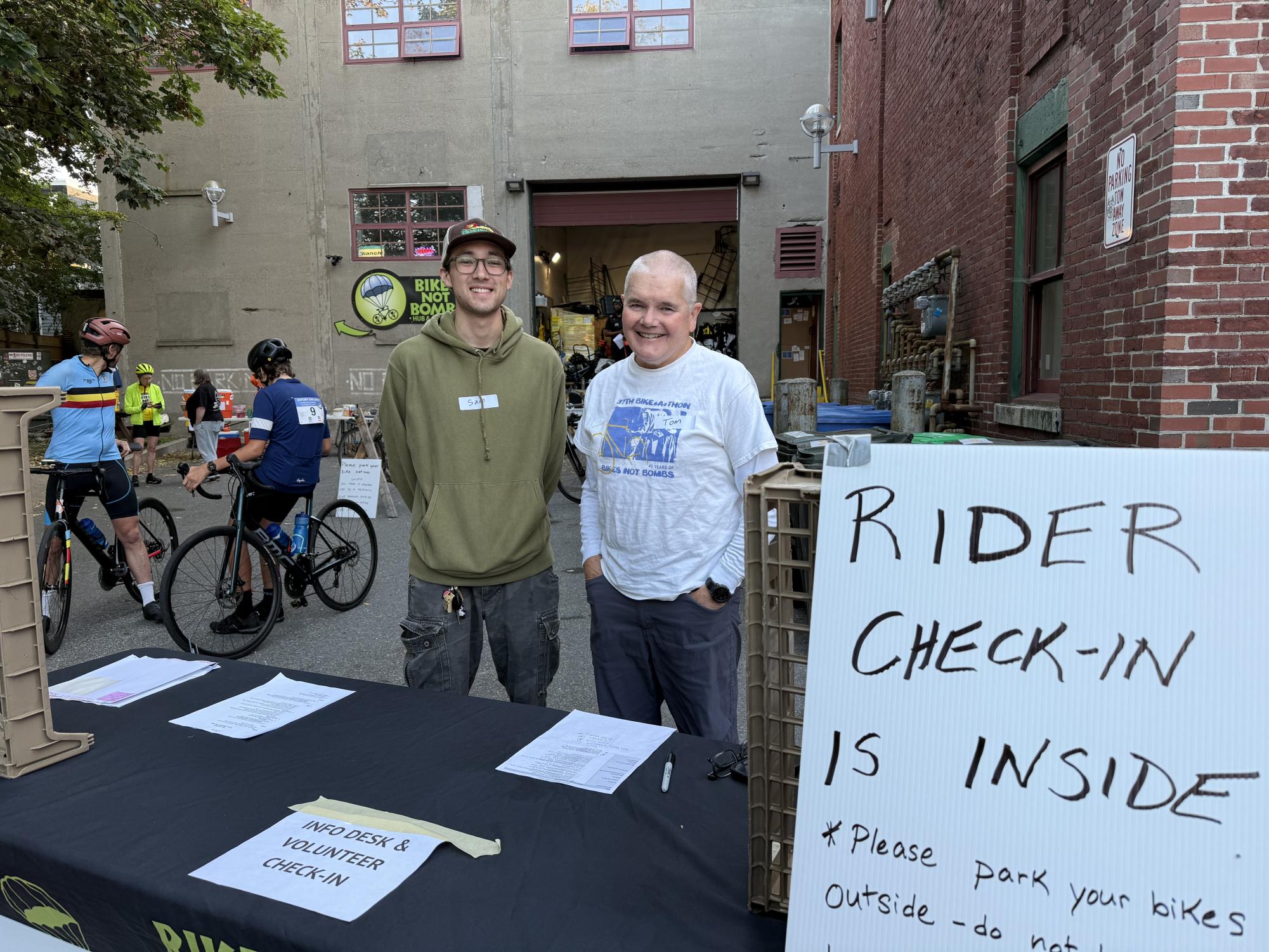
Sam Snekvik, a recent college graduate from Jamaica Plain, spent the summer of 2018 fixing bikes. As a Boston Public Schools student who wanted to earn a wage by doing something meaningful, he found Bikes Not Bombs, a nonprofit organization that uses bikes “as a vehicle” for economic justice. So, he built bikes. For one summer, then another, then another. Now, Snekvik is the manager of development and operations for Bikes Not Bombs, and he has watched the organization evolve since his early days as a youth apprentice.
Bikes Not Bombs originated in the basement of Jamaica Plain’s Ferris Wheels Bike Shop in 1984, when co-founder Carl Kurz shipped two bikes to Nicaragua. Since then, the organization’s name and scope have changed, but its location and mission remain the same.
Using bicycles, the Boston-based organization hopes to offer economic opportunities and mobility to historically marginalized communities worldwide. Its dedicated team does this through paid youth programs, mobilizing for social justice, bike donations and more. The organization is all-sustainable, all-nonprofit, and all revolves around bikes.
“You’re around people who are so involved with this subculture or way of living — fixing up bikes, riding bikes. We have a lot of youth apprentices who are into wheeling bikes and doing tricks,” said Snekvik.
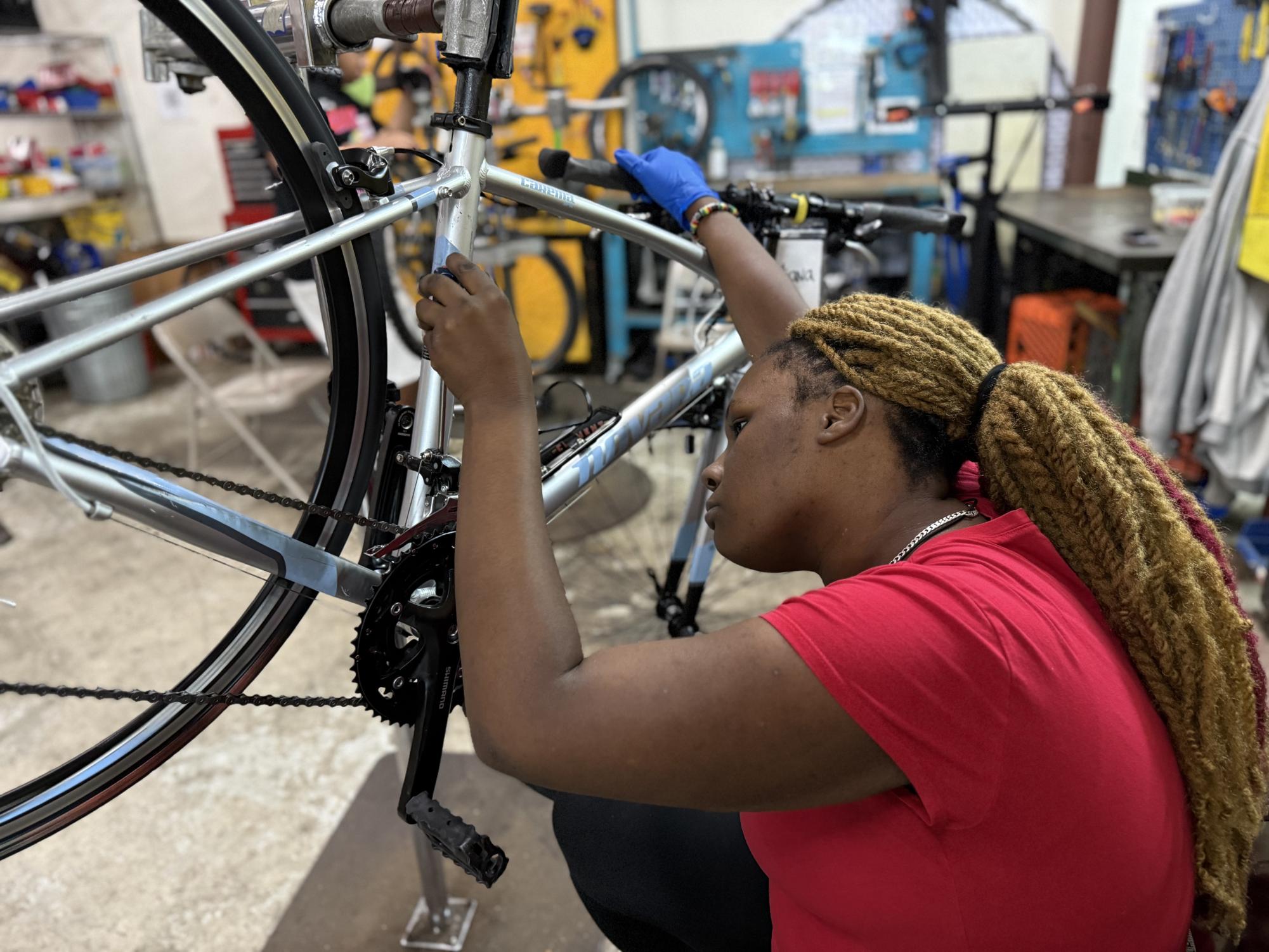
One of Bikes Not Bombs’ most prominent initiatives is the Youth Pathways Program. This is an opportunity for Boston’s 14 to 18-year-olds to earn $15 an hour and acquire many valuable skills. Their days are primarily spent learning how to inspect and repair the donated bicycles Bikes Not Bombs receives. Apprentices may also help ship the newly refurbished bikes around the world, one of the organization’s core services.
“Our Youth Pathways Program, which employs mostly Black and Brown youth from Boston, primarily offers work-based learning,” Snekvik said.
Those involved collaborate with older youth apprentices to master bike mechanics. The Youth Pathways Program offers technical and professional skills that can, and have, been applied to engineering degrees, trade work, leadership roles, and more.
“Bike mechanics, which is a technical skill that’s super hard to learn, is going to benefit you in the future,” said Snekvik. We teach them proper phone call etiquette, how to talk to people that gave money to us … they walk away with a lot of professional skills.”
This program is mutually beneficial for the organization and those who attend. Many teens who become youth apprentices, like Snekvik, continue their work at Bikes Not Bombs in leadership roles or other capacities.
“A lot of the youth apprentices have gone on to do pretty cool stuff. One of our recent alumni, Damari, now owns this waste collection business called Rejunkify. We use them to help get rid of some of our junk bikes,” Snekvik said.
Current Bikes Not Bombs CEO, Elijah Evans, started as a youth apprentice and later returned to the organization to help supervise the program.
“It’s helped me a lot in terms of knowing what types of work I want to do. They’ve given me the opportunity to try lots of different types of work … a lot of youth feel either torn, or they don’t really know the value of working in a community-centered organization,” Snekvik said.
Snekvik continued by saying that people value the ability to identify issues and repair bikes themselves. Used bikes are often in unridable or near-unridable condition, according to Snekvik.
“A lot of times, I hear people buying bikes off of Facebook Marketplace or eBay, and it’s just not super safe,” said Snekvik. “I’ve heard stories of friends who’ve gotten bikes that way, and they got in really bad crashes because the bike isn’t in good condition … It’s like buying a used car and not having it checked out by a mechanic. On a bike, you can go 40 to 50 miles per hour if you’re going downhill, not having that checked out by someone is kind of crazy.”
A bike may not seem like a hot commodity to everyone, but for those who live in areas where this is the most economical and easiest mode of transportation, it can be life-changing. Communities with poor road quality, for example, greatly benefit from having access to safe bikes. Bikes Not Bombs works to create international and local partnerships to send refurbished bikes, donated primarily by residents of Boston and Cambridge, to people who need them most.
“There’s an island off the coast of Puerto Rico where bikes are really inaccessible, but they’re also very useful there, because the roads aren’t very good. We’re working with the city government and other groups on the island, and we’re just trying to build a long-term partnership to see how we can help,” Snekvik said.
Throughout 2025, Bikes Not Bombs shipped 371 bikes to Cesta, El Salvador, and made plans to ship around 400 bikes to Ghana before the end of the year. The organization also works to increase bike access locally, donating 307 refurbished bikes to local partners such as MassBike and Cambridge Bike Give Back, and 21 to individual community members.
Bikes Not Bombs also hosts an “Earn a Bike” program where anyone can attend a bike mechanics workshop and repair a bike they can take home once rideable. “Tool Time” is another program that offers people the opportunity to restore their personal bikes with the organization’s extensive tool collection and professional guidance.
The nonprofit has grown substantially since those first two bikes were sent to Nicaragua. Bikes Not Bombs also has a bike shop that sells some of the high-end donations and youth-refurbished bikes. In line with their sustainability mission, no parts are wasted. The shop includes sorted, functional bike parts and gear.
“Because we process so many used bikes, old and new, we have a lot of really affordable used parts,” said Snekvik. “So we have a used parts section that’s almost like a thrift store, but for biking equipment and parts.”
Bikes Not Bombs has established itself in the Boston communities it serves (mainly Roxbury, Dorchester, and Mattapan) through neighborhood events like mobile mechanic tents that offer free bike evaluations and repairs.
They host opportunities to get outside and meet new people, such as “Wheels to Wellness,” a Saturday group bike ride, and the “Commuter Challenge,” where teams compete to compare different modes of transportation. Their annual Bike-a-thon is an anticipated fundraiser with more than 500 people riding along one of three different scenic routes.
With a plethora of programs, events, and partnerships, Bikes Not Bombs uniquely addresses racial equity and environmental sustainability.
“We’re pushing for sustainability, pushing for racial equity, pushing for something as simple as learning how to fix a bike,” said Snekvik.
Editor’s Note: An earlier version of this story misstated the spelling of Damari’s name and the name of their company. The correct spelling is Damari, and the company is Rejunkify. The story has been updated.