For retiree Nora Blake, it began at the park.
It was at Doherty Park, on the Somerville-Everett side of Charlestown, Blake learned a house on the other side of the neighborhood at Lawrence Street had been knocked down. “That led to me hearing there were no [demolition] protections… and I was wondering ‘how was this happening?’”
Between Boston’s development boom and notorious housing shortage, more and more neighborhoods are wondering how to greet change while preserving the historic built environment. For Blake and other Charlestown residents, the stakes are historic.
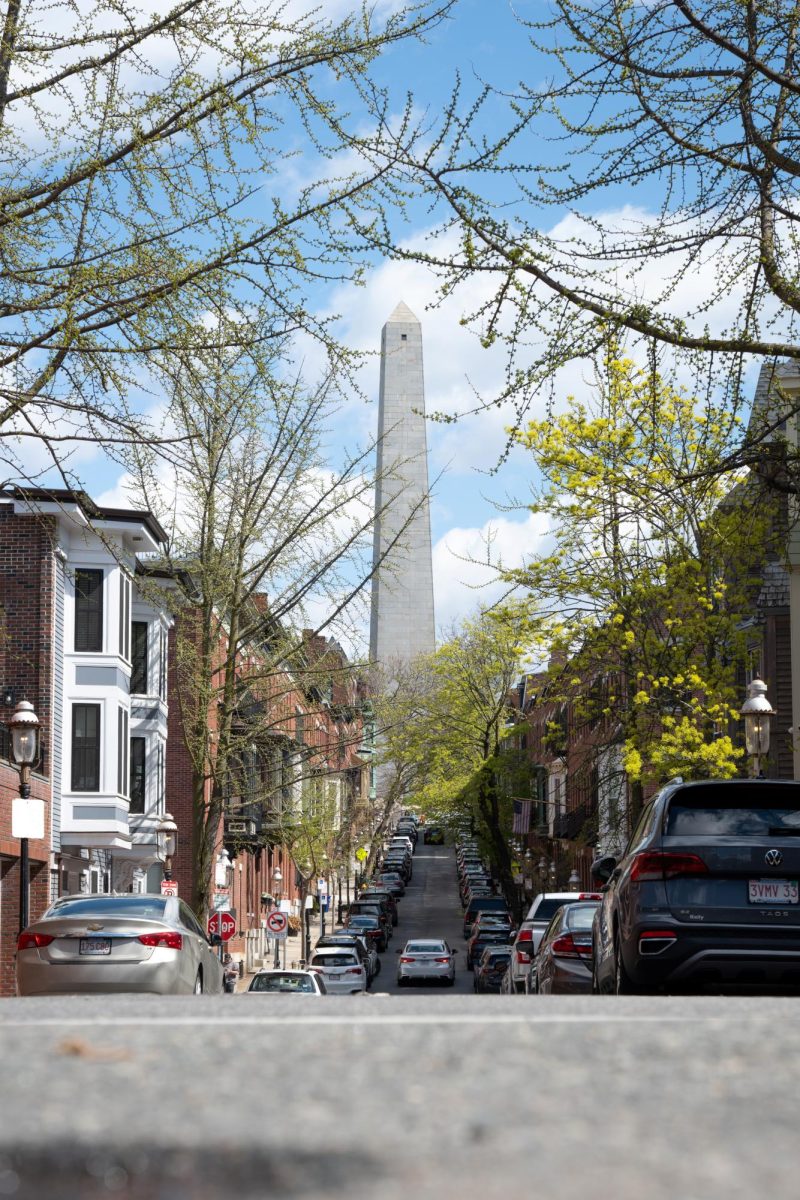
No Boston neighborhood holds history so close to its sense of identity as Charlestown. Look around every corner and there are reminders of the past. Nothing epitomizes this more than Charlestown’s contribution to the Boston skyline: the Bunker Hill Monument.
Surrounding the Monument are brownstone apartments that are as historic as they are pricey. Last year, one entered the market for the eyewatering amount of $6.5 million. This is Monument Square. Named for the eponymous obelisk, the square is ringed by century-old brownstones and the not-much-younger old Charlestown High School. It has an ageless feel, unlike from the many new structures going up across the city.
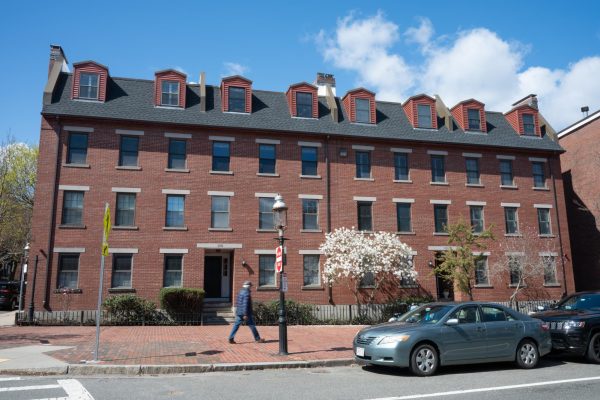
With Boston’s real estate market as white hot as ever, a number of Charlestown residents have been looking for ways that would allow Monument Square’s historic feel to be maintained. Now they believe they have found one: a local ordinance change that would have the area rezoned as a “local landmark district.”
In Boston, a local landmark district is an area with a historic significance that isn’t just local. Given the role of the Battle of Bunker Hill in the nation’s history, potential qualification is not exactly a stretch of the imagination.
The proposal grew out of a planning initiative for Charlestown known as PLAN: Charlestown. Initiated by the Charlestown Preservation Society, it promoted “contextually appropriate” development in Sullivan Square and the Rutherford Avenue Corridor.
Even before the 2023 adoption of PLAN: Charlestown by the Boston Planning and Development Agency, the CPS was moving quickly to channel momentum to arguably Charlestown’s most historical area. This is because, according to the CPS, for all of the historic significance conferred on Monument Square, these buildings are not protected from demolition, “and can be demolished after a 90-day demolition delay.”
By that standard, perhaps the only building in Monument Square with an ironclad protection from demolition by developers is the Monument itself.
In July 2022, the Boston Landmarks Commission and the Mayor’s Office responded to resident concerns by forming a study committee. Since then, meetings, hearings, and other public engagements have been held. Earlier this month, the study committee hosted a community engagement event to solicit feedback on creating a landmark district and also shared materials from the meeting on the City of Boston’s website. The whole landmarking process is expected to be completed in 2027.
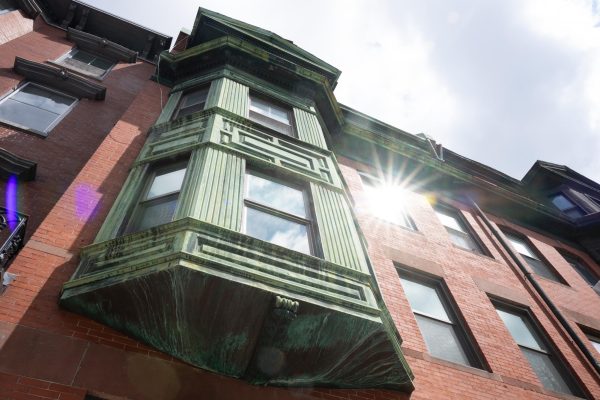
Adopting the “local landmark district” designation would move questions of development from the BPDA to the Boston Landmarks Commission. By doing so, says CPS president Amanda Zettel, developers will abide by historic architectural aesthetic. This, she says, is smart planning.
“[Local Landmark Districts] outline and guide growth. This gives neighborhood predictability in these historic areas. They regulate massing and open space,” said Zettel. So, in terms of historic areas, it’s important to not only protect those but to also give an idea of what growth looks like.”
Zettel has worried about a lack of local awareness or familiarity with the proposal and the issues involved. However, she says that the response from locals in the know has been largely positive, with almost all having a story behind their involvement.
Nora Blake, from Doherty Park, is one of those residents. A native of Buffalo, NY, Blake has been living in Charlestown for 25 years. In that time, she has come to know it as a very friendly place where neighbors look after and look in on each other. She believes a landmark district designation can help keep that in place.
“It’s an amazing neighborhood,” she said. “Everyone comes together, and I highly recommend people consider it to raise their family. Developers are all for us not having protections, so we have to come together. I want people to ask themselves, ‘What does Charlestown look like to you? What will it look like in 50 years?’”
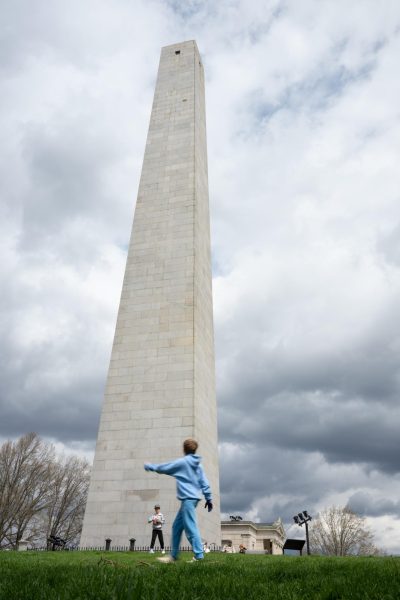
Like Zettel, Blake believes history and development can coexist.
“Charlestown is undergoing tremendous change, which is exciting, and is setting it up for success in the future and reinvigorating The Town,” she said. “But it does not have to be at the expense of the history of the place.”
But while residential response has been largely positive, some aren’t sold on the idea. Though there hasn’t been any formalized opposition, Blake and Zettel have both seen disinformation proliferate in neighborhood social media groups and the comments sections of news articles.
However, Blake believes this comes from a lack of accurate information than from any conscious malice. She is also hopeful that this study process can be carried out in a congenial manner, no matter what disagreements can exist. “You can disagree,” she said, “and still meet for coffee the next day.”