
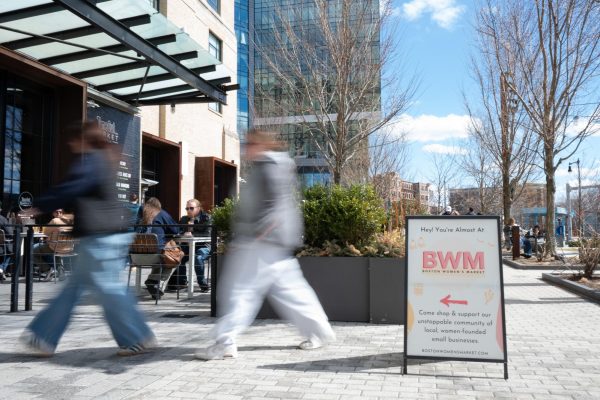
March is Women’s History Month and is often used to empower women across different professional fields. However, for Cara Loffredo, it’s more than just a monthly ambition. She’s the co-founder and owner of Boston Women’s Market (BWM), an organization hosting markets spotlighting female entrepreneurs across the city. “While it’s great that people stop this time of year to truly appreciate women who are impacting their community, we’re trying to do this year-round and share their stories every day,” Loffredo said.
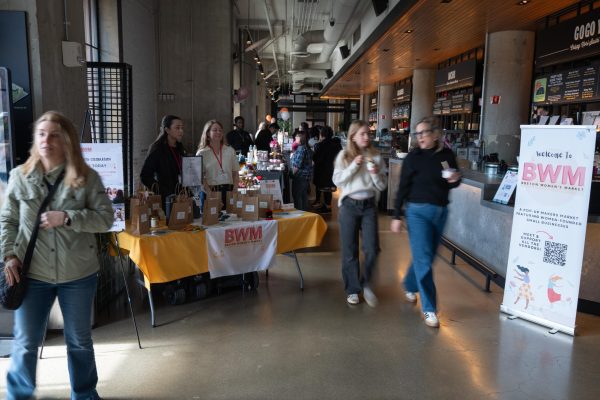
This year-round commitment continues this month with BWM hosting a Women’s Month Celebration Market at Time Out Market in Fenway on March 21 and an afternoon market at Night Shift Brewing in Everett on March 28.
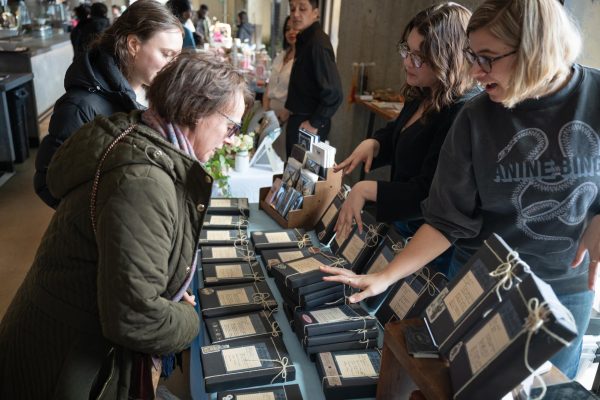
Boston Women’s Market hosts up to 40 markets a year across the Greater Boston area, supporting local female entrepreneurs as well as providing an online sales space to support vendors outside of market events. Vendors are from all across the entrepreneur space, ranging from candle makers to wood workers, and local bakers.
According to the 2025 Wells Fargo Impact of Women-Owned Businesses Report, women own 39.2% of all enterprises. The Greater Boston area ranks among the top five cities in the country for the growth of women-owned business, making organizations like BWM uniquely important to the community.
In 2017, BWM began as a response to the Me Too movement and the first Trump administration. What started as an Instagram profile, spotlighting female entrepreneurs throughout the Boston community, has grown into an organization that hosts up to 40 markets a year across the city, showcasing female-owned small businesses across the entrepreneurial landscape.
Loffredo explained that four founders came to the organization with different motivations, some political, some entrepreneurial, but all with the goal of helping people across the city. Loffredo is the only founder left running the market and has “always said entrepreneurship is in my blood.”
While the bread and butter of the organization is markets, Loffredo and her team also offer assistance with marketing through a partnership with Bloom Collective, a woman-owned creative agency that helps small businesses with all elements of marketing and design, workshops and free educational guides to help with things such as SEO strategies and bookkeeping.
Another core aspect of the markets is ongoing partnerships with property management companies across the city.
“There are just really a handful of several very large property management companies that pretty much own various swaths of Boston, so we maintain and build relationships with them in order to open doorways for our small businesses,” Loffredo said. Since the pandemic, “these large entities wanted to start showing that they cared about small businesses in their community and they really wanted to partner with us to show that they’re involved,” she said.
The post-COVID dynamic can be seen in more ways than one.
“During COVID and after COVID, all of a sudden, there were tons of markets everywhere,” Loffredo said.
While it became an effective way to get communities back outside to support local businesses, it also made vending at markets more difficult for local entrepreneurs.
Loffredo noted, “at one market pre-COVID, they would make the same amount of money as they do now in three markets, so they’re spread a little thinner.”
While markets may be more commonplace, BWM sets itself apart with a lack of competitiveness among sellers and intentional shoppers who are really committed to supporting local female-owned businesses.
Markets are hosted across the city from Brighton to Seaport, in venues like Faneuil Hall and Time Out Market in Fenway. “Each location is so unique and they offer different things to the shoppers which is why we’re not just in one location,” Loffredo explained. “We find that what might resonate with someone in Jamaica Plain might not do well in Somerville… The goal is to expose small businesses to the various neighborhoods, personalities and environments in Boston.”
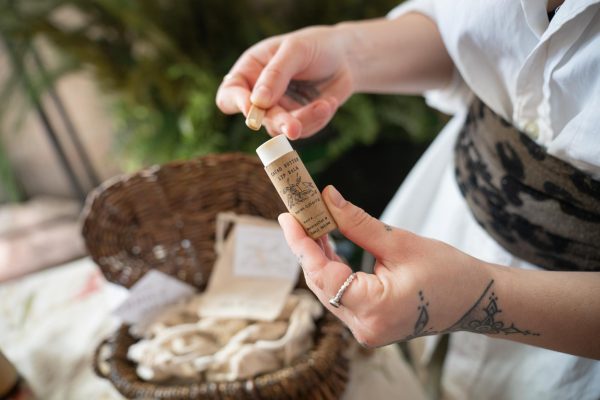
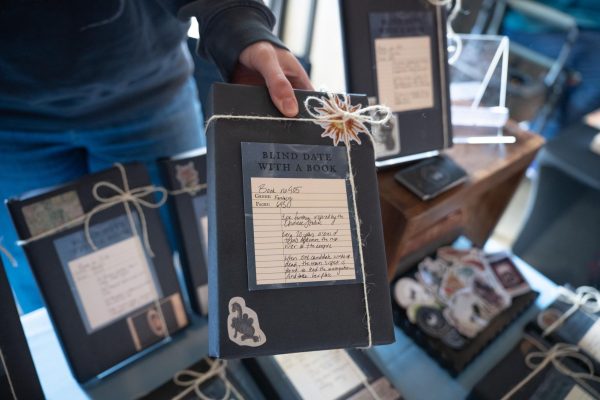
There is not just variety in locations but also in vendors. While many local markets focus just on arts, crafts, or food, at BWM “you can have anything from cheesemongers and chocolate makers to woodworkers, jewelry makers and digital artists, it really runs the gamut,” Loffredo said.
The specific dynamics of a vendor market however, varies based on location. At Fenway Markets, food and beverage tends to do very well, as people are “coming to Time Out to eat and sample,” Loffredo said.
While many vendors attend most markets, some only go to specific neighborhoods where their products sell well. ”If you go a few times to the same market, you’ll probably see a lot of the same people there,” Loffredo said.
The spread across locations and businesses has changed the game for many small businesses. Loffredo feels very proud of the successes that have come out of BWM, “We’ve had a lot of small businesses. Their very first time ever putting their product out to the world was at Boston women’s market and now they have a storefront.”
One of her favorite examples of the Market’s success is The Half Cookie. Loffredo said, “Danielle, who’s the owner… her first time ever selling her cookies was at a Boston women’s market at Warehouse 11 in Somerville. She brought some cookies and sold out about an hour and a half into the market.”
Danielle Velez, the owner of The Half Cookie was shocked by this reception, explaining how she “rolled up there with a table, a tablecloth, and cookies, that was it. I immediately looked around and thought, oh wow, I’m really out of my league. But people were so nice.”
The Half Cookie is now a thriving local business, with a storefront in Chestnut Hill, nationwide shipping, and another store opening soon in Winthrop.
Velez reflected on how BWM helped shape her business. “They do such a good job of breaking down these things that feel like too massive to do on your own,” she said. “I just can’t say enough great things about them.”
It is due to initiatives and organizations like BWM that women can build the confidence to “put themselves out there more and apply for more things, whether it be money and investment, to retail space, to grants, to being involved in art installations and things like that,” said Loffredo.
“Whether you have a great sales day or not a good sales day, the people that you’re going to meet, both customers and vendors, that in and of itself is going to be worth doing the market,” Velez said.
Outside of markets, there are a number of new partnerships BWM is working on, including reinvigorating a retail incubator space. Loffredo describes it as “a storefront where small businesses rotate in and out of it on a weekly basis to give businesses a sense of what it means to have a retail shop without all that extra risk hanging over their heads as a small business owner.”
For Velez, this concept was a vital turning point for The Half Cookie. While visiting Arizona, she came across a similar incubator shop and was immediately drawn to the idea. “I remember saying to my husband, this would be so cool, I would love to do this. We literally got home and Boston Women’s Market had offered it that summer,” she said. “That was my first time trying to be a shop, and now we have two permanent locations.”
Loffredo is also working on an online project to help with advancement for the vendor community that will hopefully launch in April or May.